
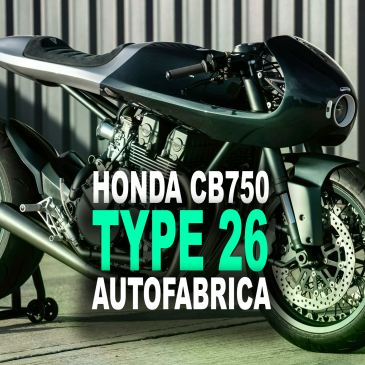
TYPE 26
Quando a customização deixa de adicionar e começa a desenhar
Some motorcycles demand attention from across the room.
Others reward you for getting closer.
The Auto Fabrica Type 26 belongs firmly to the second kind.
Built around a 1996 Honda CB750 Nighthawk, the Type 26 has already become a familiar name in the custom motorcycle world. It has been photographed, featured and dissected countless times.
Yet photographs of the whole motorcycle only tell part of the story.
Because the real character of the Type 26 lives in the details.
In the surfaces, The transitions, The materials, The gaps.
The way light moves across the bodywork.
And, perhaps most importantly, in everything Auto Fabrica chose not to put there.
This is a motorcycle that makes a compelling argument for a simple idea:
great customization isn’t always about adding more.
Sometimes, it’s about knowing what to remove.
___
Há motocicletas que chamam atenção de longe.
E existem aquelas que começam a fazer sentido quando você chega perto.
A Type 26, criada pela inglesa Auto Fabrica a partir de uma Honda CB750 Nighthawk de 1996, pertence definitivamente à segunda categoria.
À primeira vista, ela parece quase simples.
Uma silhueta extremamente limpa. Poucos elementos aparentes. Uma paleta de cores contida. Nenhum excesso visual.
Mas basta observar por alguns segundos para perceber que essa simplicidade não aconteceu por acaso.
Ela foi construída.
E talvez seja justamente aí que esteja a diferença entre uma motocicleta modificada e uma motocicleta verdadeiramente desenhada.
STARTING WITH THE RIGHT QUESTION
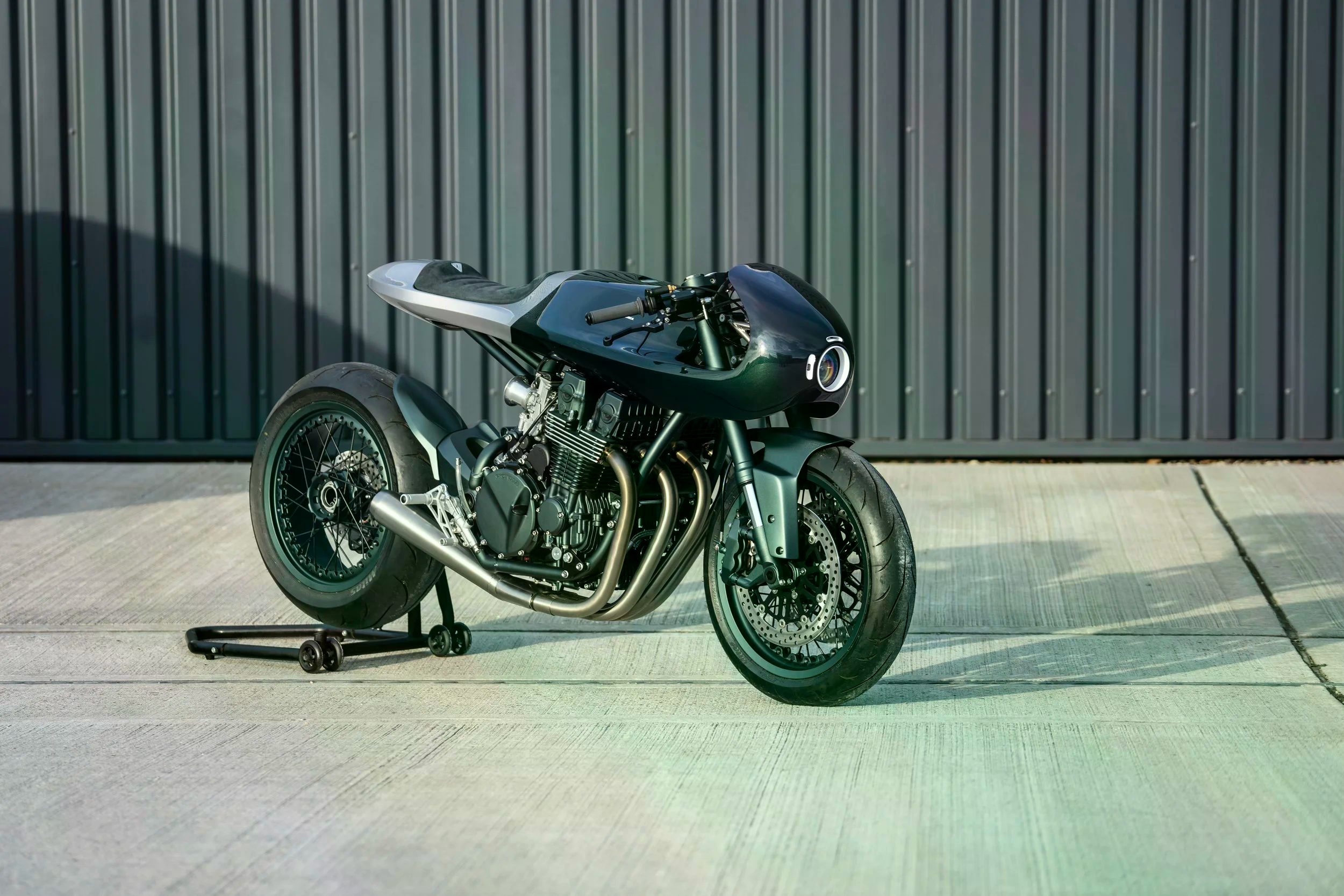
The Type 26 begins with an unlikely protagonist.
A 1996 Honda CB750 Nighthawk.
Not an exotic donor. Not a rare homologation special. Not one of the obvious platforms that usually attracts the attention of high-end custom builders.
And that choice matters.
Auto Fabrica wasn’t interested in polishing an already desirable motorcycle.
The Nighthawk was treated as raw material.
A mechanical foundation from which an entirely different visual language could emerge.
The studio describes the Type 26 as something akin to a “dress watch on two wheels” — elegant, purposeful and reserved rather than overtly aggressive. Its influences range from Honda’s classic forms and racing proportions to the remarkable Britten V1000.
The result doesn’t feel nostalgic.
It feels translated.
___
UMA CB750 QUE NÃO FOI TRATADA COMO UMA CB750
A escolha da base já diz alguma coisa sobre a filosofia do projeto.
A Auto Fabrica poderia ter partido de uma motocicleta naturalmente desejada pelo universo das customizações. Em vez disso, escolheu uma CB750 Nighthawk dos anos 1990 — uma motocicleta que raramente ocupa o centro das atenções quando se fala em projetos especiais.
A escolha não parece ter sido baseada em status ou raridade.
Foi baseada em potencial.
A arquitetura do motor, as proporções e a simplicidade da plataforma ofereciam uma fundação sobre a qual seria possível construir outra coisa.
E essa é uma distinção importante.
A Type 26 não tenta transformar a Nighthawk em uma versão melhor equipada de si mesma.
Ela utiliza a Nighthawk como matéria-prima para criar uma nova interpretação.
A Auto Fabrica descreve o conceito como uma espécie de “dress watch” sobre duas rodas: uma motocicleta elegante, proposital e reservada para os momentos que realmente importam. A inspiração mistura antigas formas Honda, proporções influenciadas por competição e referências à extraordinária Britten V1000. (Auto Fabrica)
Não é nostalgia.
É tradução.
THE SILHOUETTE COMES FIRST
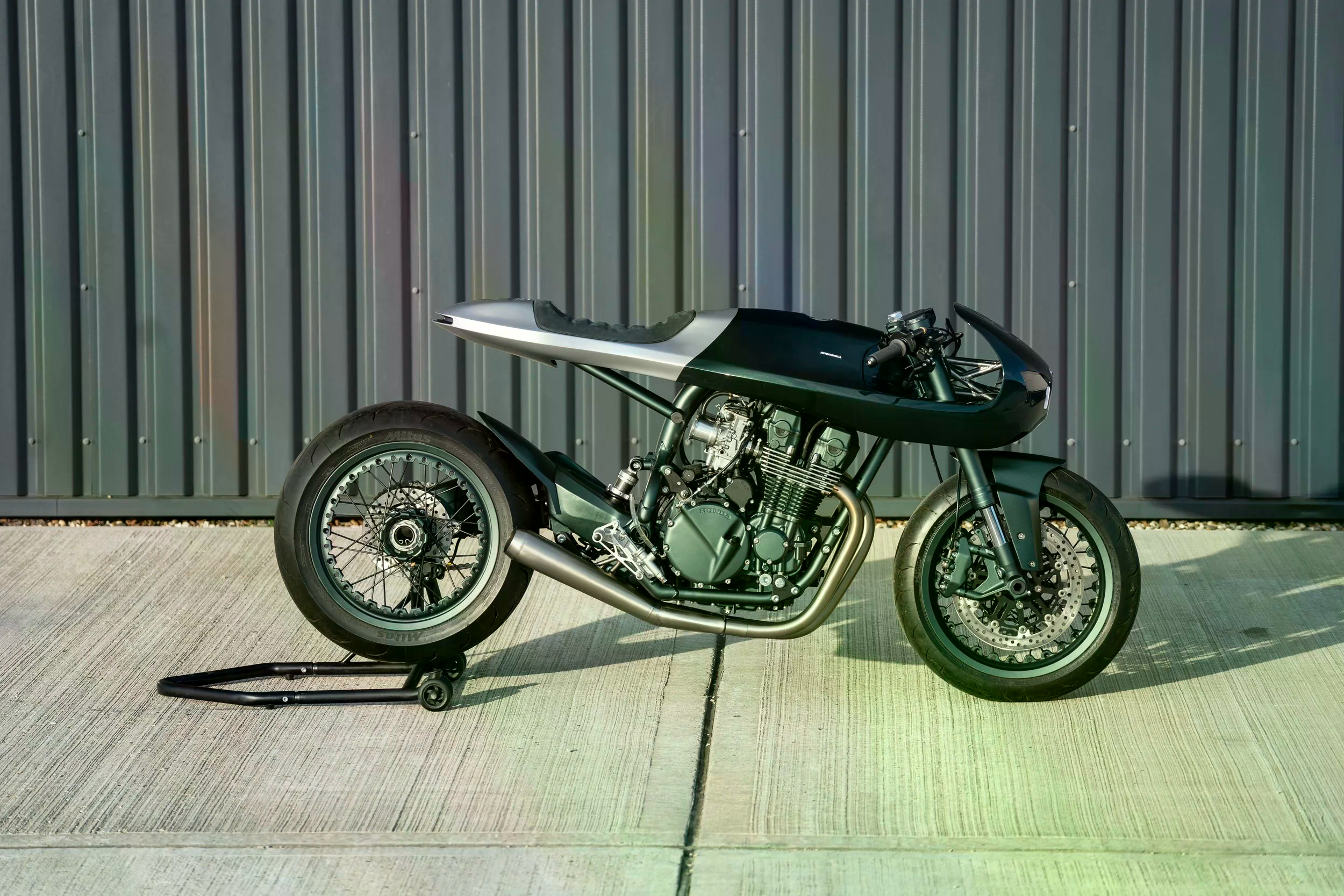
The most powerful element of the Type 26 may also be the one that’s easiest to overlook.
Its silhouette.
More precisely:
the continuity of its surfaces.
Auto Fabrica created a carbon-composite monocoque body that allows the front fairing, tank cover and tail section to read almost as one continuous volume.
There is no visual catalogue of separate aftermarket parts.
The eye simply travels.
From the nose.
Across the tank.
Through the narrowing waist.
And into the tail.
It is almost architectural in its logic.
Instead of asking:
What can we add here?
The project seems to ask:
What is the minimum surface required to create the desired form?
That is a much harder question to answer.
___
O DESENHO COMEÇA NA SILHUETA
Talvez a característica mais poderosa da Type 26 seja também a menos ostensiva.
A carroceria.
Ou melhor:
a continuidade dela.
A Auto Fabrica criou uma estrutura monocoque em compósito de carbono que transforma carenagem, cobertura do tanque e rabeta em uma leitura praticamente contínua.
Não existe aquela sucessão habitual de peças visualmente independentes.
O olhar percorre a motocicleta como percorreria uma única superfície.
A dianteira envolve o farol.
A superfície passa pelo tanque.
O volume se estreita progressivamente.
E finalmente desaparece na rabeta.
É quase uma operação de arquitetura.
Em vez de perguntar “que peça podemos acrescentar aqui?”, o projeto parece perguntar:
“qual é a menor quantidade de superfícies necessária para construir essa forma?”
Essa pergunta muda tudo.
Porque reduzir elementos não significa necessariamente simplificar o projeto.
Às vezes significa torná-lo muito mais difícil.
WHEN THERE’S NOWHERE TO HIDE
Complex motorcycles can hide imperfections.
Layered bodywork creates visual noise.
Multiple components interrupt the eye.
Textures compete.
Brackets disappear behind other parts.
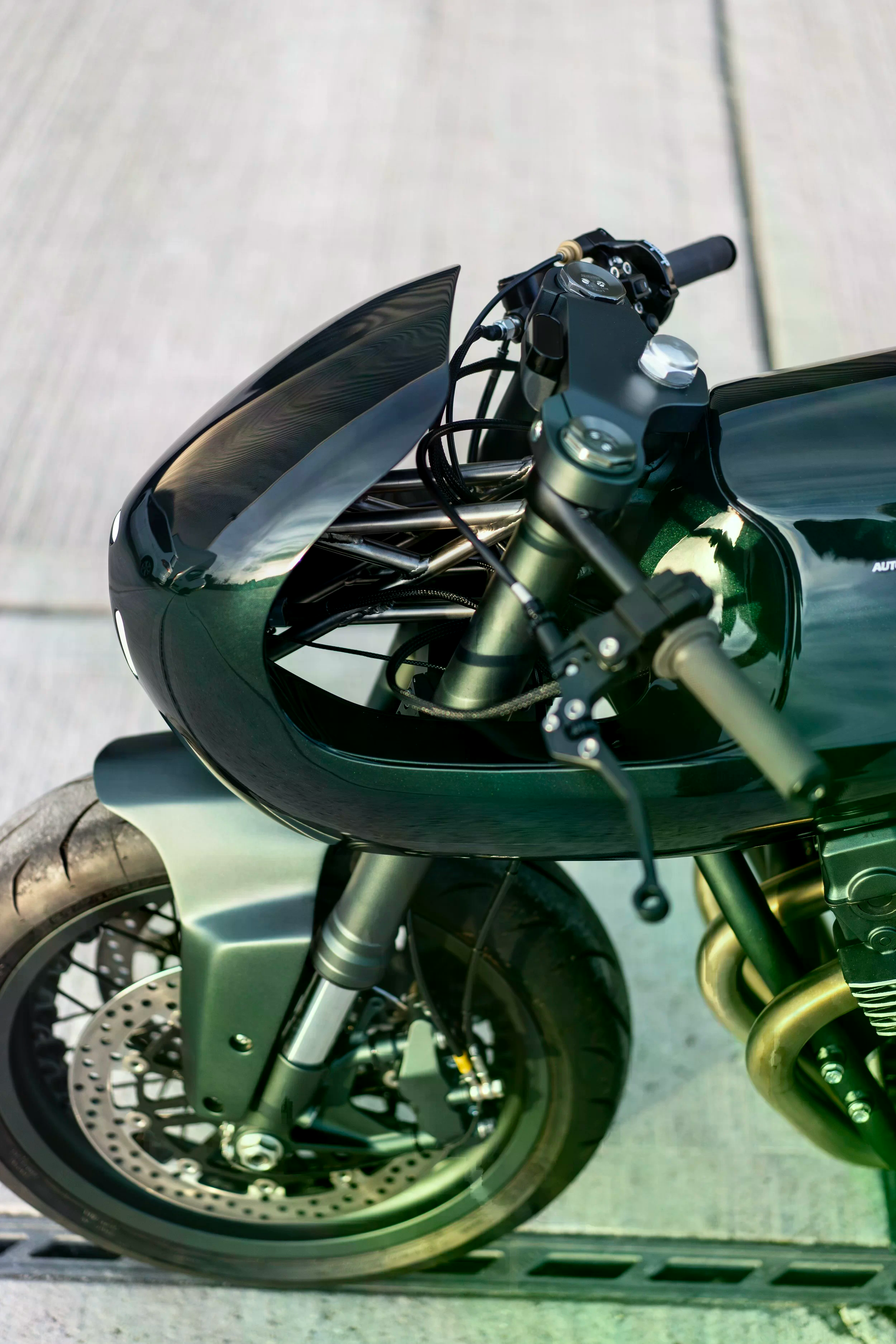
The Type 26 removes much of that camouflage.
And suddenly every decision matters.
A poorly resolved joint would be obvious.
An awkward bracket would become a feature.
An unnecessary fastener would attract attention.
A careless material transition would interrupt the entire composition.
That is the paradox of minimalism:
the fewer things you see, the more precisely everything has to be resolved.
The simplicity of the Type 26 is therefore not the absence of work.
It is the evidence of it.
___
NÃO HÁ ONDE ESCONDER
Projetos visualmente complexos conseguem esconder muita coisa.
Linhas se cruzam.
Peças se sobrepõem.
Texturas competem.
Componentes criam distrações.
Na Type 26 acontece o contrário.
Quanto menos existe, mais cada detalhe passa a importar.
Uma junção mal resolvida seria imediatamente percebida.
Um suporte desproporcional quebraria a leitura.
Um parafuso fora de contexto chamaria atenção.
Uma mudança de material sem propósito interromperia o fluxo.
A própria Auto Fabrica reconhece que, em um desenho dessa natureza, cada linha e cada encontro ficam expostos — e que alcançar essa simplicidade exige muito mais trabalho do que o resultado final deixa transparecer.
É uma daquelas situações em que o trabalho aparece justamente porque quase desaparece.
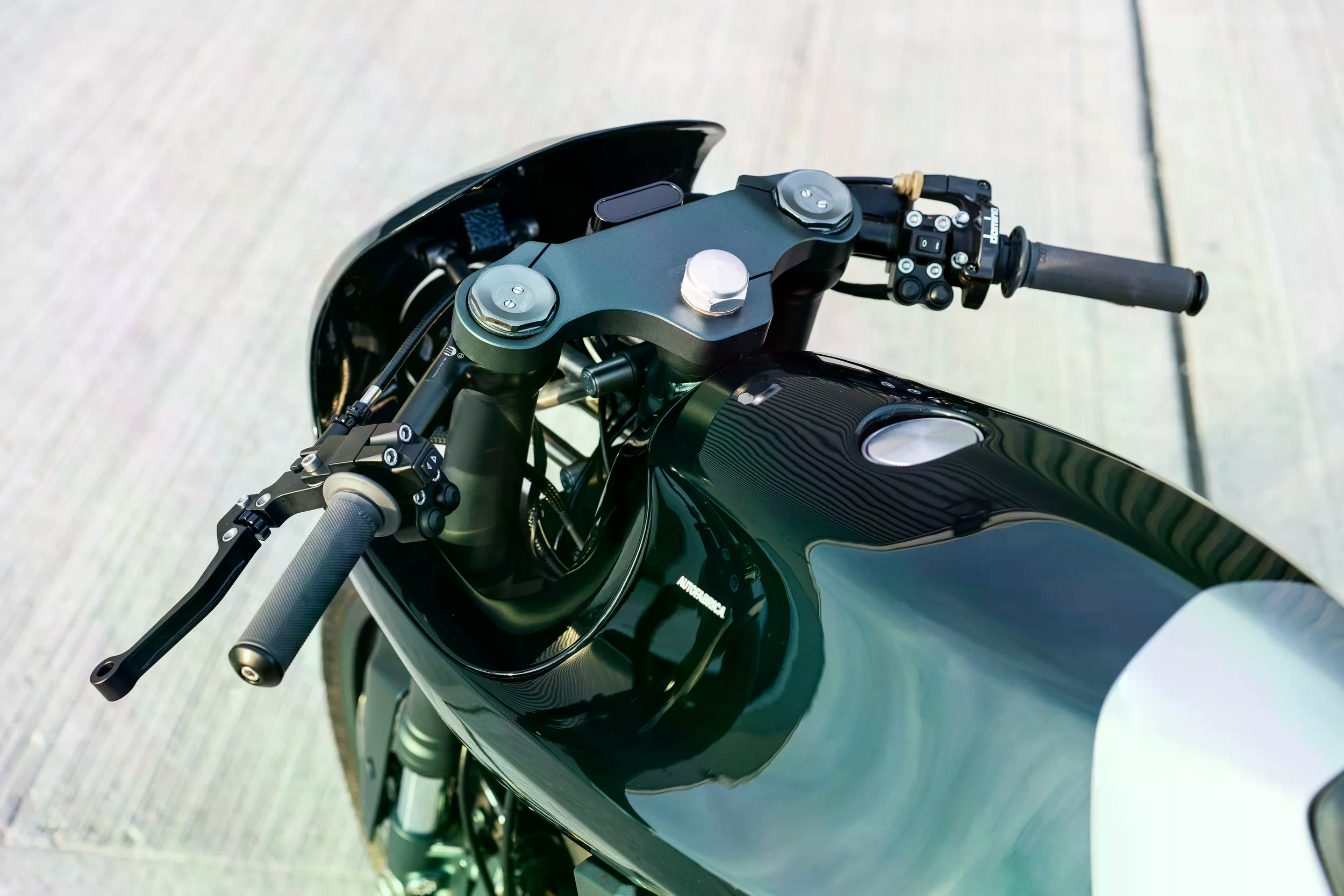
THE TANK THAT ISN’T REALLY THE TANK
Look at the central bodywork and the motorcycle initially appears straightforward.
A beautifully shaped tank.
Except it isn’t quite what it appears to be.
The visible tank-like form is a composite cover, while the actual fuel cell sits within an aluminium structure underneath. Even the filler arrangement has been integrated into the bodywork rather than treated as another object sitting on top of it.
That may sound like engineering trivia.
It isn’t.
It is design.
By hiding the functional volume beneath the surface, Auto Fabrica preserves the continuity of the form.
The tank stops being a separate component.
It becomes part of the sculpture.
___
O TANQUE QUE NÃO É EXATAMENTE UM TANQUE
Outro detalhe interessante está no volume central.
Visualmente, temos aquilo que o cérebro reconhece imediatamente como um tanque.
Mas a construção é mais sofisticada.
A carroceria externa funciona como uma cobertura de compósito, enquanto a célula de combustível propriamente dita permanece escondida em uma estrutura de alumínio.
Até a tampa de abastecimento foi incorporada de maneira discreta ao conjunto.
Isso parece um detalhe técnico.
Não é.
É uma decisão de design.
Ao esconder aquilo que normalmente seria uma peça visualmente dominante, a Auto Fabrica preserva a continuidade da superfície.
O tanque deixa de ser um objeto aplicado sobre a motocicleta.
Passa a ser parte da própria escultura.
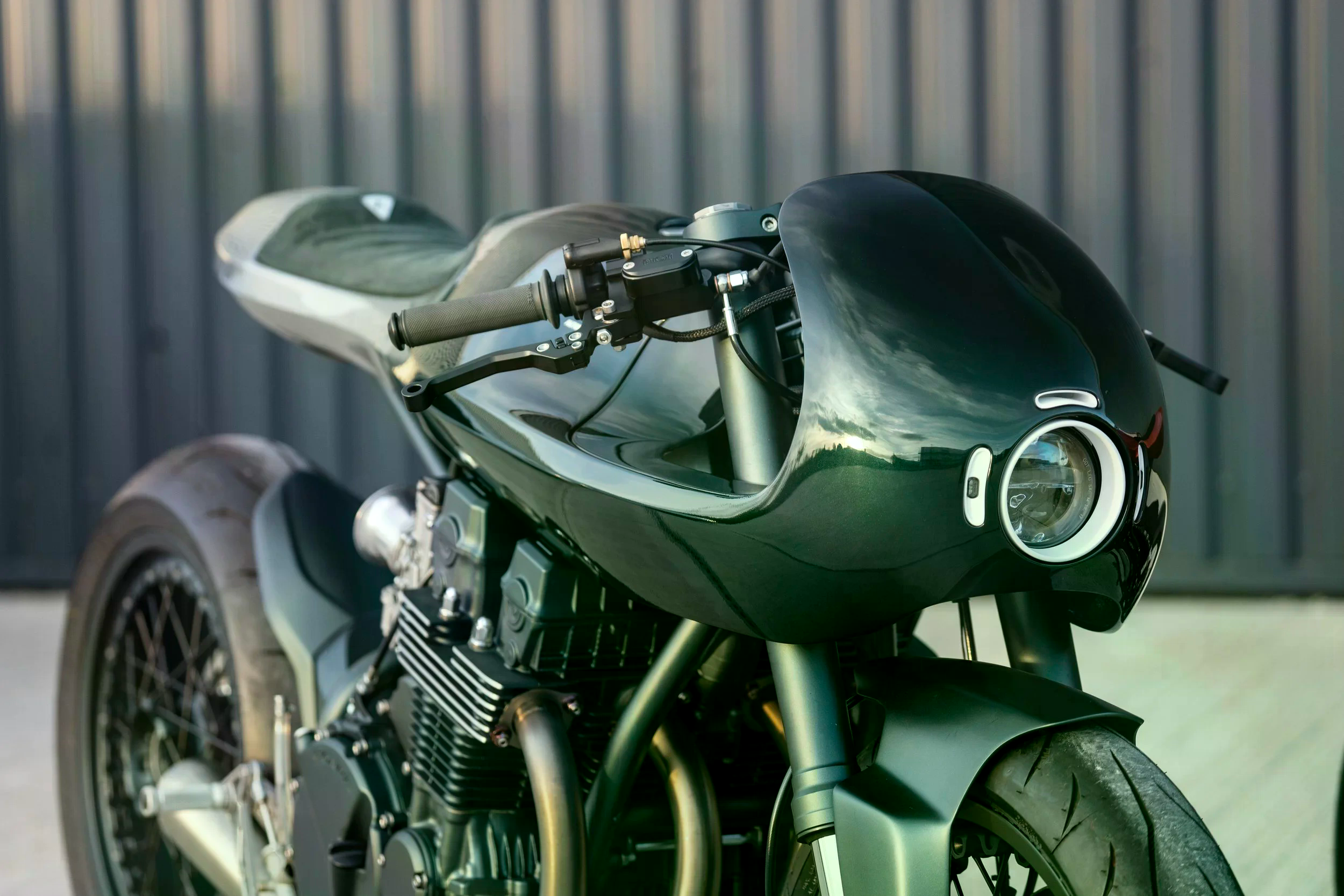
LIGHTING AS BODYWORK
The same thinking continues at both ends.
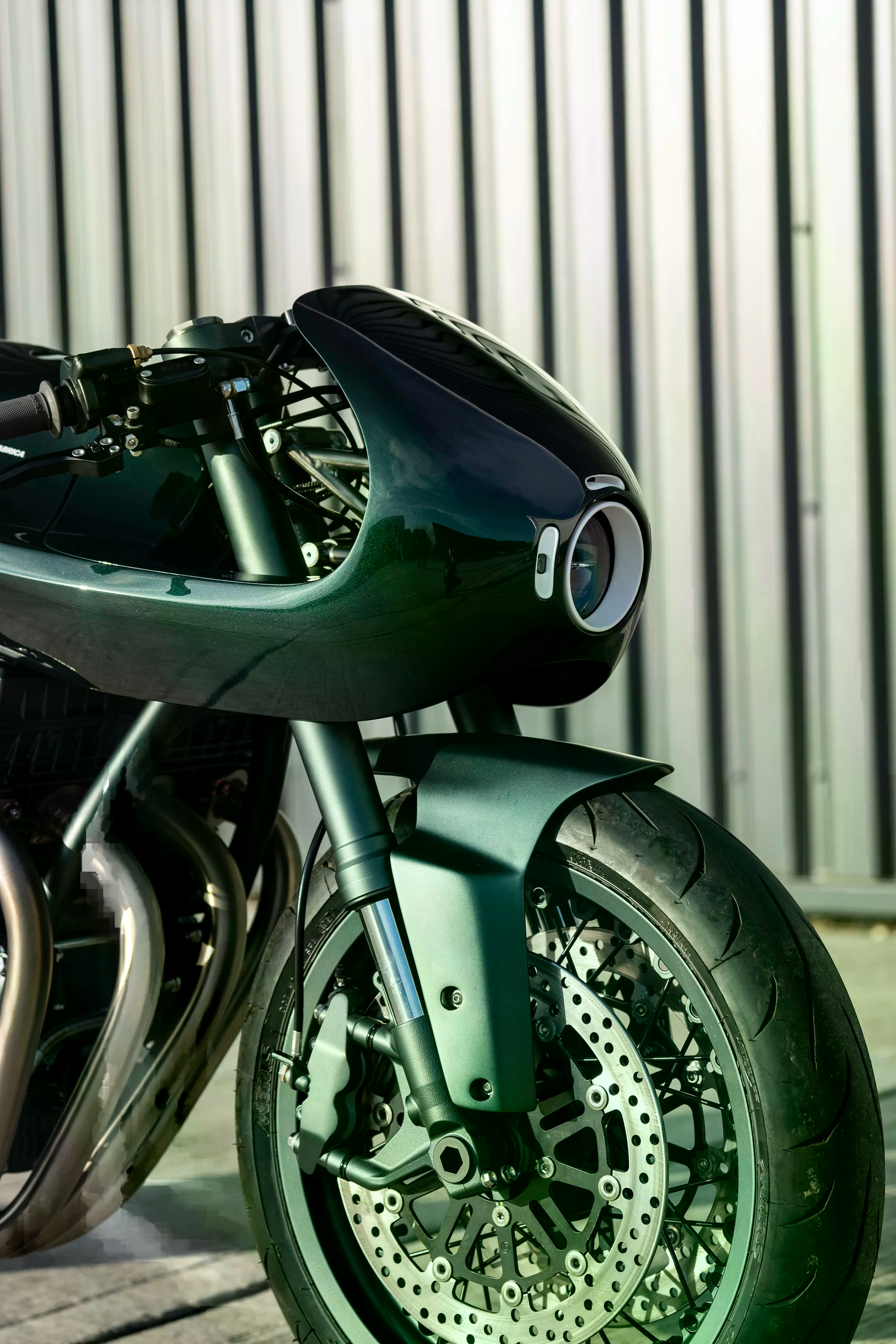
A compact JW Speaker headlight is integrated into the front bodywork, while the indicators are incorporated into the surrounding surfaces rather than left hanging from conventional brackets.
At the rear, the lighting follows the same principle.
Present.
Functional.
Almost invisible.
That distinction is important.
A component can be necessary without demanding visual attention.
The best solution is often not to hide it completely.
It is to make it belong.
On the Type 26, the lighting doesn’t decorate the bodywork.
It becomes part of it.
___
UMA DIANTEIRA QUE NÃO PRECISA GRITAR
O farol JW Speaker de 100 mm está praticamente incorporado à linguagem da carroceria.
Os indicadores também não aparecem como acessórios independentes.
Foram integrados ao conjunto dianteiro.
Na traseira, a mesma lógica continua: iluminação embutida e discretamente recuada, praticamente desaparecendo dentro do desenho.
É uma solução recorrente no design contemporâneo de produto:
quando um componente precisa existir, mas não precisa ser protagonista, ele deve pertencer à forma.
Na Type 26, iluminação não é decoração.
É arquitetura.
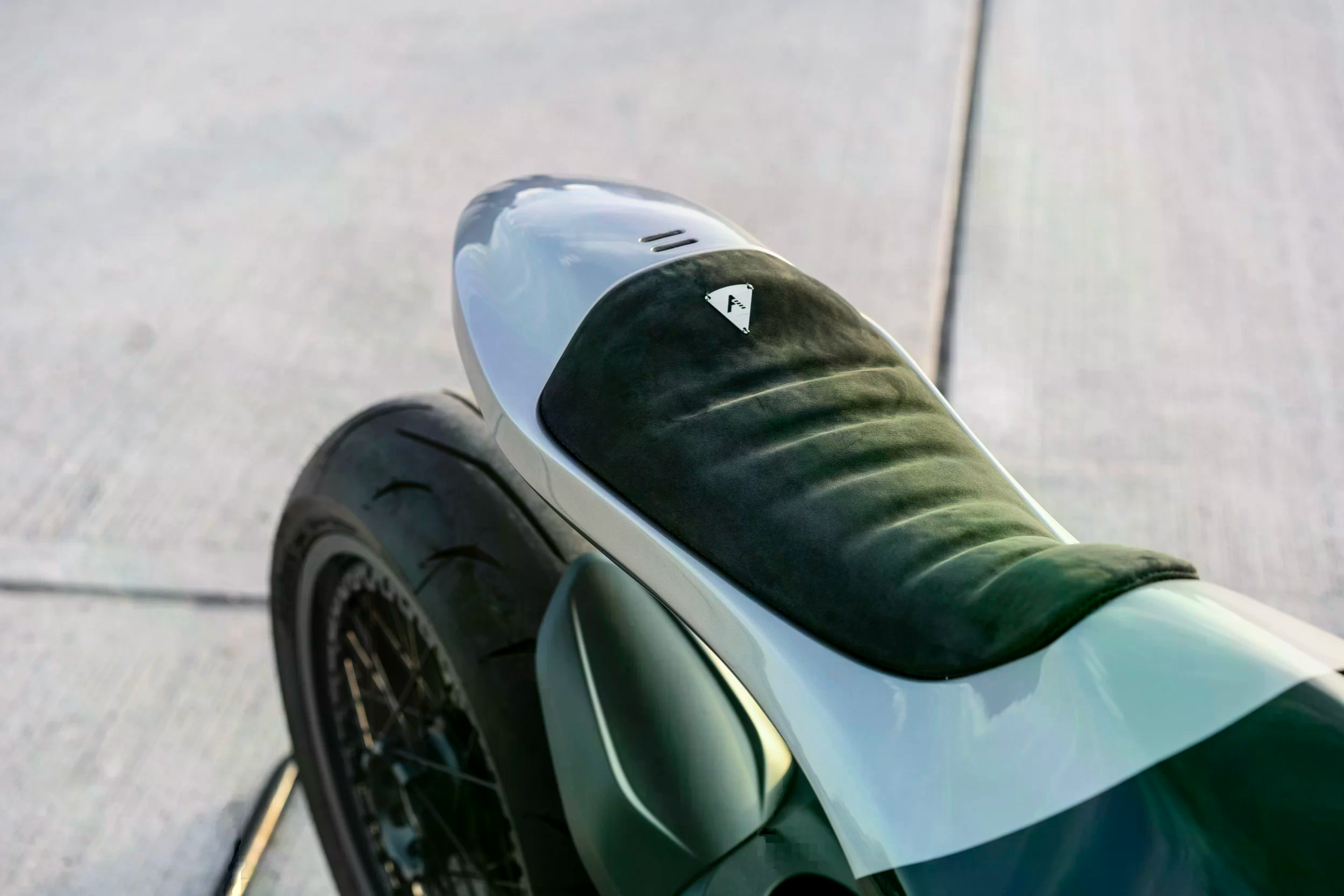
CARBON, TITANIUM, ALUMINIUM, ALCANTARA
The material palette is equally disciplined.
Carbon composite establishes the main visual volume.
Aluminium provides structure beneath it.
Titanium appears in structural details and in the exhaust system.
Alcantara defines the points where rider and machine meet.
Nothing feels selected simply because it is expensive or exotic.
Each material has a role.
And that is where the Type 26 begins to feel less like a collection of premium components and more like a piece of product design.
It doesn’t try to look expensive.
It tries to look resolved.
There is a difference.
___
CARBONO, TITÂNIO, ALUMÍNIO E ALCANTARA
A sofisticação do projeto também está na maneira como os materiais são utilizados.
Carbono para construir o grande volume.
Alumínio escondido onde a estrutura precisa estar.
Titânio em elementos estruturais e no sistema de escape.
Alcantara para o contato do piloto com a motocicleta.
Cada material parece ter uma função própria dentro da composição.
E isso é particularmente importante porque a Type 26 não tenta parecer cara.
Ela parece precisa.
Existe uma diferença enorme.
O luxo visual convencional frequentemente depende da abundância.
Aqui, o valor nasce da seleção.
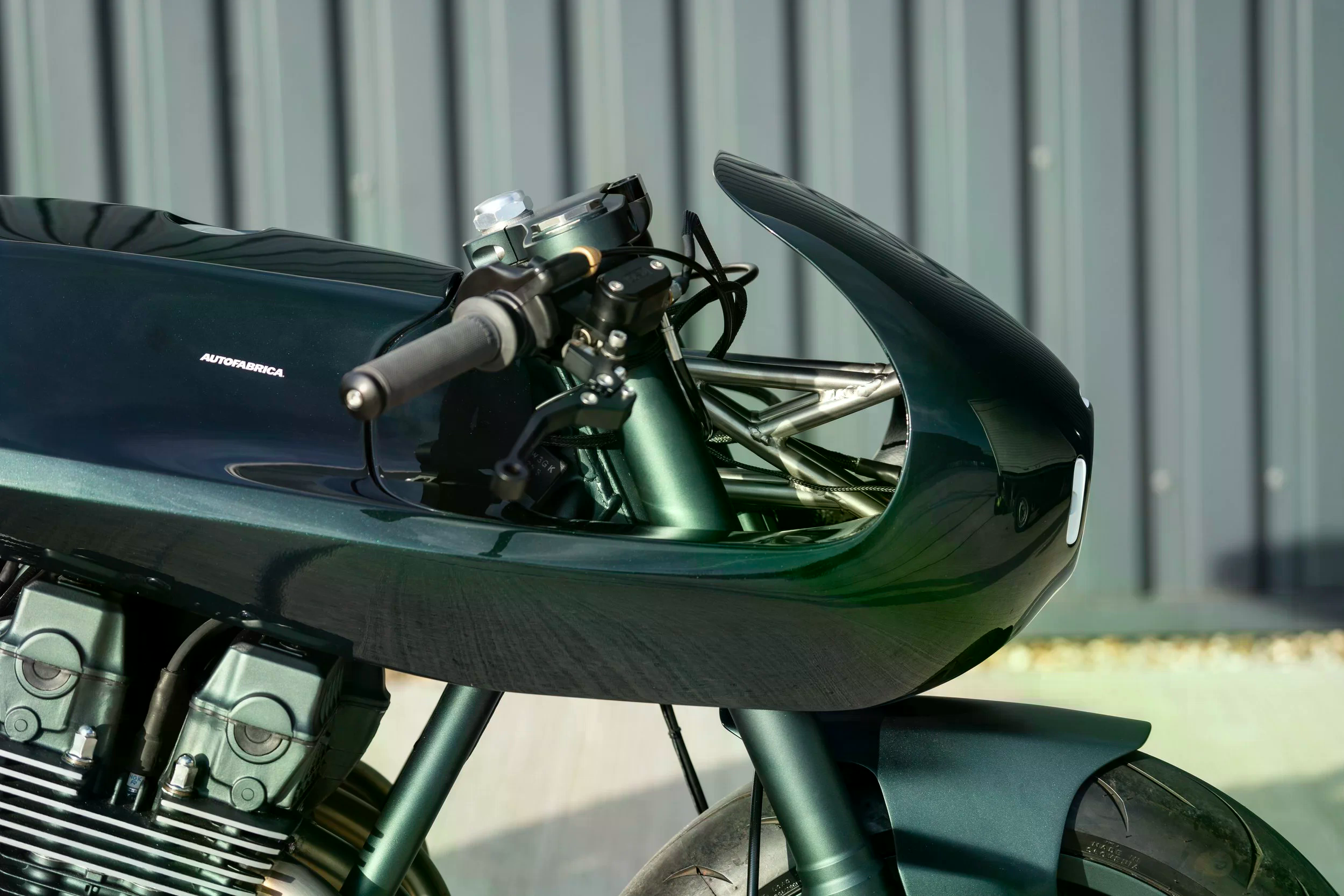
THE DETAIL THAT REVEALS THE THINKING
One of the more revealing details is the titanium support structure used around the front bodywork.
It could have been hidden.
Instead, it becomes part of the visual language.
This is a recurring quality throughout the Type 26.
Function isn’t necessarily disguised.
It is refined until function and form become the same conversation.
The approach feels closer to architecture than conventional custom building.
Structure isn’t something to conceal.
When properly designed, structure becomes part of the beauty.
___
O DETALHE QUE TALVEZ MAIS REVELE O PROJETO
Há uma pequena estrutura de titânio responsável por sustentar a carenagem dianteira.
É um detalhe que provavelmente passaria despercebido em uma fotografia rápida.
Mas ele revela bastante sobre a filosofia do projeto.
Porque a solução poderia simplesmente ter sido escondida.
A Auto Fabrica escolheu construir algo que, além de funcional, participa da composição.
É quase como uma estrutura arquitetônica que não precisa ser escondida para parecer elegante.
Ela assume sua função.
E justamente por isso se torna parte da estética.
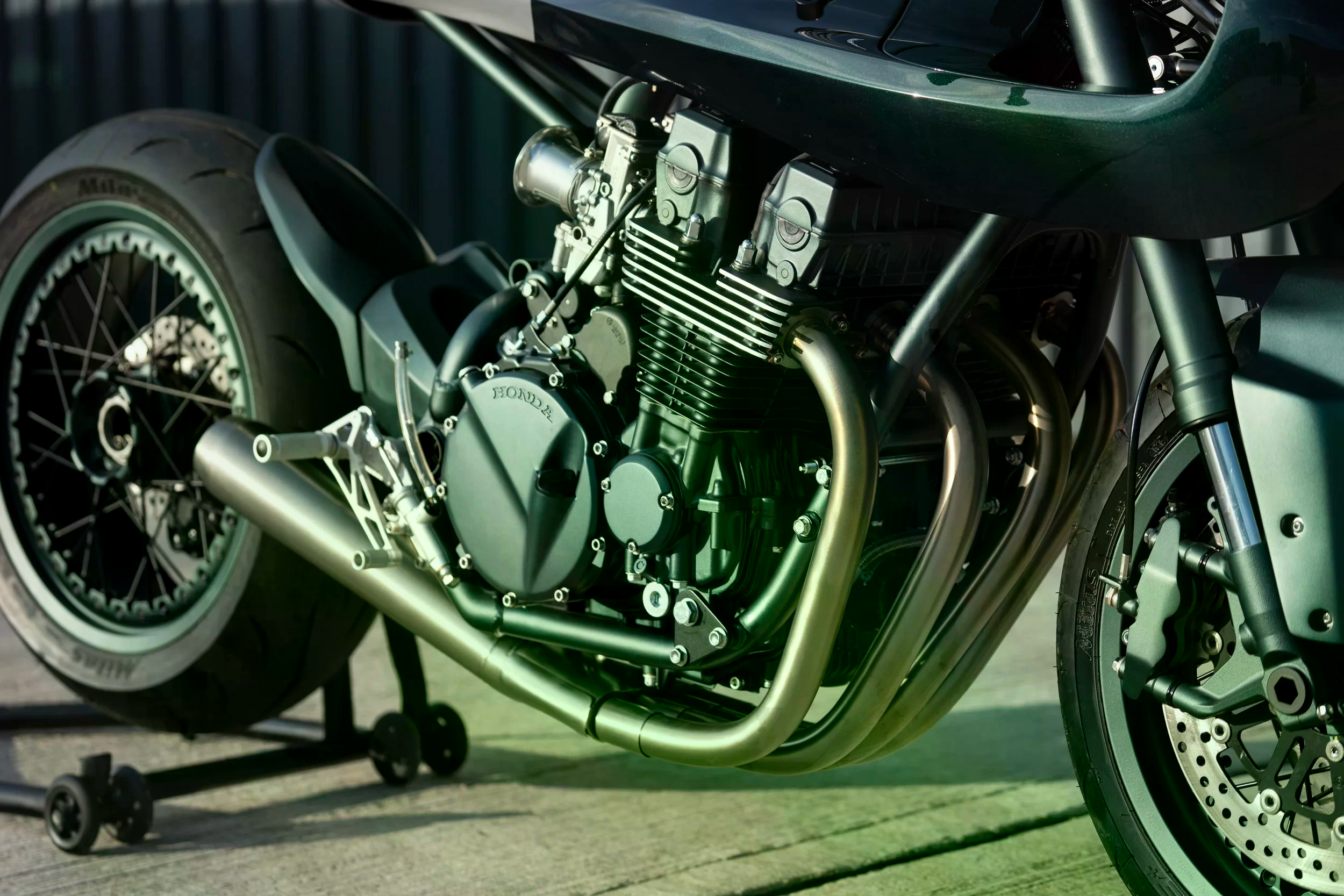
THE ENGINE STILL MATTERS
A spectacular body can easily become a shell around an ordinary mechanical package.
That isn’t what happened here.
The CB750’s four-cylinder engine was rebuilt and fitted with Mikuni RS34 flat-slide carburettors and velocity stacks, giving the motor a sharper, more purposeful character.
Yet the engine remains recognisably mechanical.
Cooling fins.
Metal.
Fasteners.
Mechanical depth.
This matters because the Type 26 never becomes completely sterile.
The clean bodywork creates a contemporary outer layer.
The engine reminds you that underneath it is still a machine designed to move, vibrate, breathe and make noise.
That contrast gives the motorcycle its tension.
___
O MOTOR NÃO FOI DEIXADO PARA TRÁS
Seria fácil construir uma carroceria extraordinária e simplesmente deixar o conjunto mecânico como coadjuvante.
Não foi o que aconteceu.
O quatro cilindros da CB750 foi completamente reconstruído e recebeu carburadores Mikuni RS34 de guilhotina, acompanhados de velocity stacks.
O resultado é uma resposta mais imediata e um caráter mecânico mais agressivo.
Mas existe algo ainda mais interessante:
o motor continua visualmente reconhecível.
As aletas, os volumes e a mecânica aparente fazem contraponto à limpeza quase futurista da carroceria.
É justamente essa tensão que impede a Type 26 de parecer um objeto excessivamente esterilizado.
Existe tecnologia.
Existe acabamento.
Mas ainda existe uma máquina ali dentro.
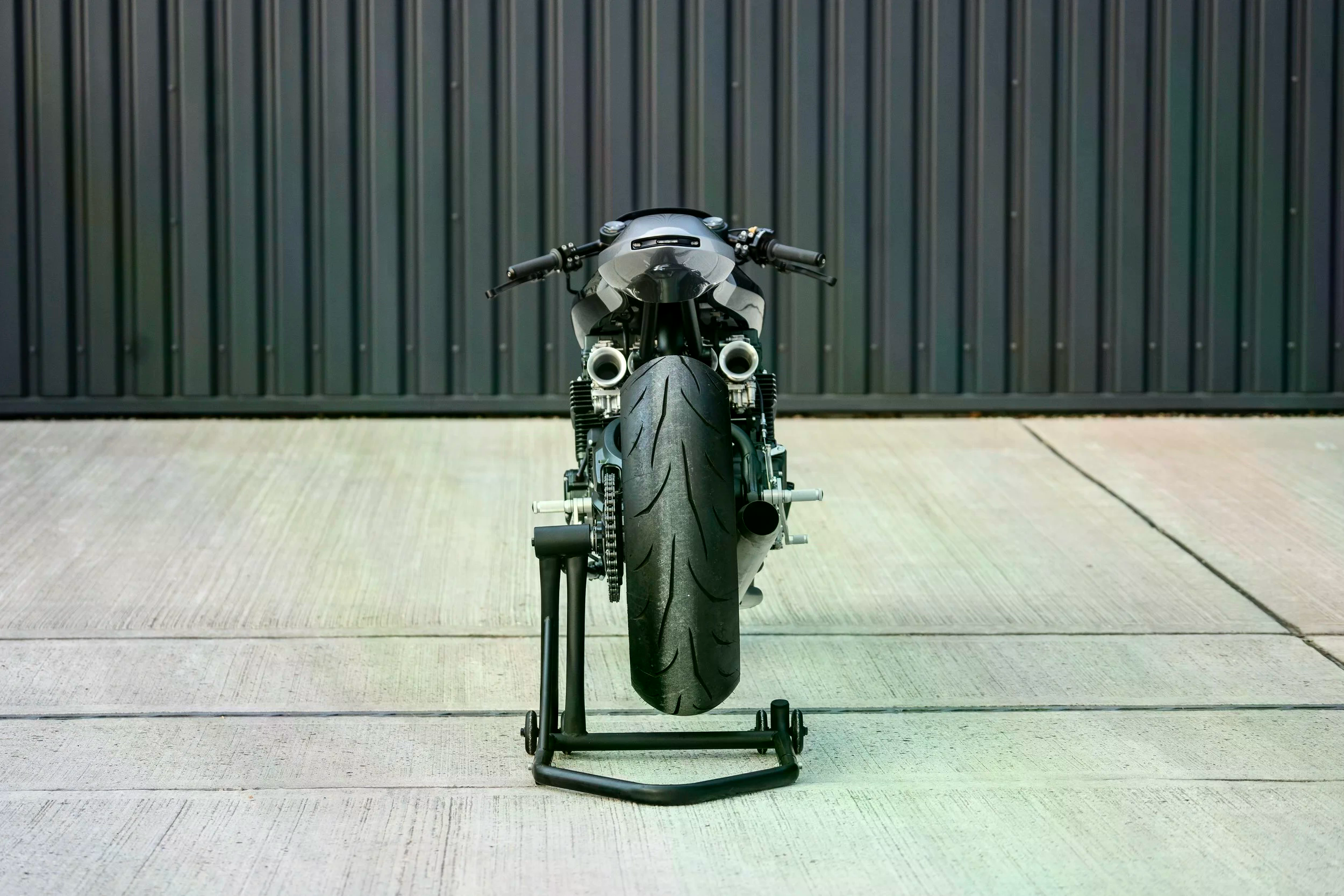
THE EXHAUST AS A LINE
The handcrafted 4-into-1 titanium exhaust is another example of the same philosophy.
Rather than becoming a loud visual statement, it follows the architecture of the motorcycle.
The tubes bend with purpose.
The system is compact.
The material brings its own texture and character.
And, according to Auto Fabrica, it delivers a sound to match the visual drama.
This is what happens when a mechanical component is treated as a design element.
The exhaust isn’t something fitted to the motorcycle.
It feels as though it was drawn with it.
___
O ESCAPE COMO DESENHO
O sistema 4×1 em titânio, construído artesanalmente pela própria Auto Fabrica, talvez seja um dos melhores exemplos dessa abordagem.
Tubos cuidadosamente curvados.
Conexões precisas.
Uma saída extremamente compacta.
E uma escolha de material que não é apenas funcional.
O titânio permite uma presença visual leve e, segundo a própria Auto Fabrica, entrega um dos sons mais marcantes produzidos em seus projetos.
O interessante é observar a relação entre o escape e o restante da motocicleta.
Ele não parece um componente que foi “colocado depois”.
Parece ter sido desenhado simultaneamente com a motocicleta.
E essa diferença é fundamental.
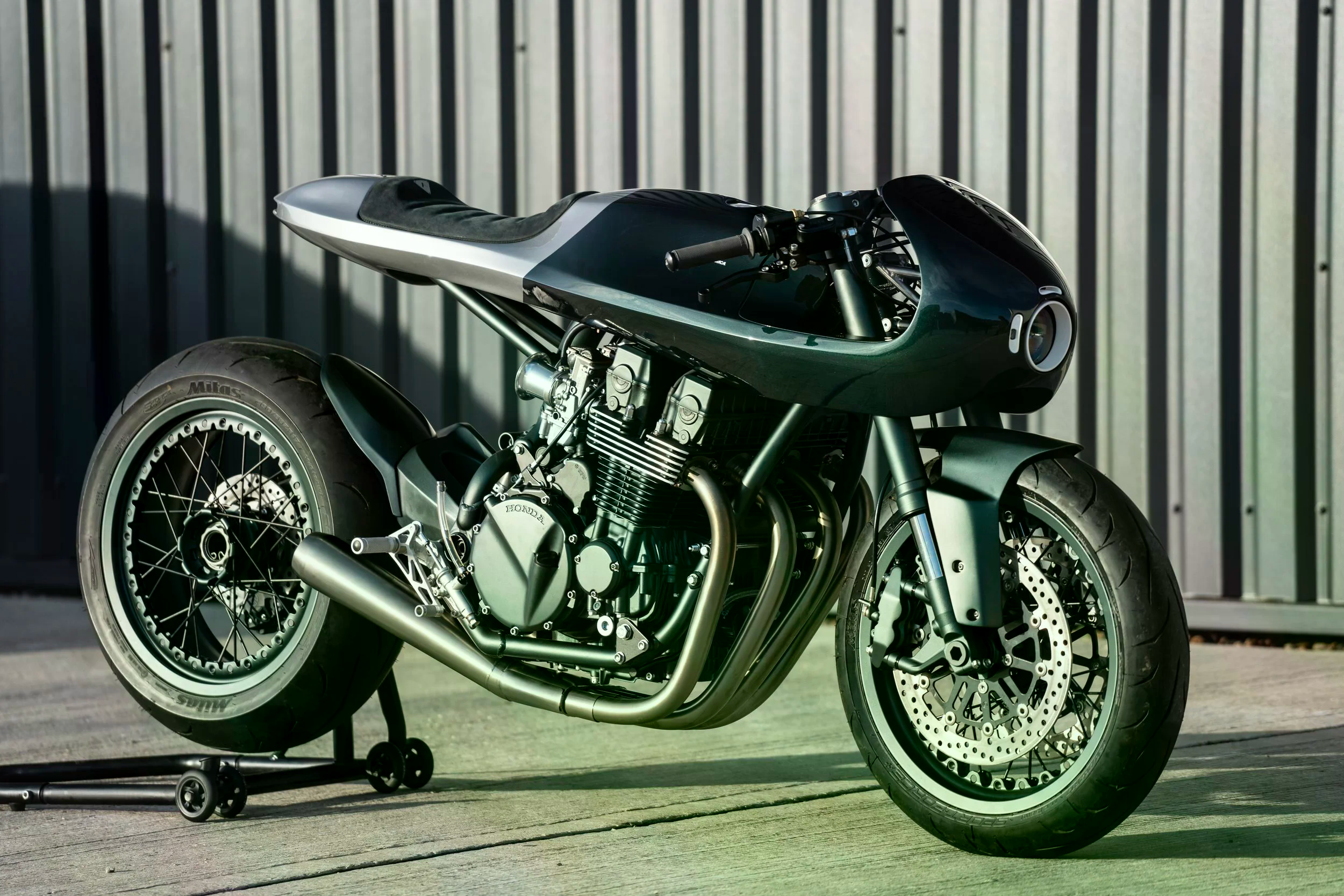
A HONDA WITH A LITTLE MV AGUSTA, SUZUKI AND A LOT OF AUTO FABRICA
The chassis work is just as deliberate.
The rear suspension architecture was transformed with a single-sided swingarm sourced from an MV Agusta Brutale 800.
At the front, inverted Suzuki GSX-R components replace the original setup.
Kineo wheels combine the visual language of classic wire wheels with modern engineering, while the motorcycle also incorporates components from Motogadget, ISR and other specialist manufacturers.
On paper, that’s a long list of different origins.
In the finished motorcycle, you barely think about it.
And that is the point.
A lesser build can become a parts catalogue.
A mature build makes the parts disappear into the concept.
The components serve the motorcycle, rather than the motorcycle serving the components.
___
QUANDO UMA MV AGUSTA ENCONTRA UMA HONDA
Talvez a maior intervenção mecânica esteja escondida na traseira.
A suspensão original deu lugar a uma balança monobraço proveniente da MV Agusta Brutale 800.
O conjunto foi integrado à estrutura original por meio de uma nova solução de montagem, acompanhada pelo sistema traseiro correspondente.
Na dianteira, foram utilizados componentes invertidos de Suzuki GSX-R.
As rodas são Kineo, mantendo a aparência clássica das rodas raiadas, mas com uma execução contemporânea e pneus Mitas Sportforce.
É uma combinação curiosa.
Honda.
Suzuki.
MV Agusta.
Kineo.
Motogadget.
JW Speaker.
Auto Fabrica.
Normalmente, juntar tantas referências poderia resultar em um catálogo de peças.
Aqui acontece o contrário.
O conjunto parece pertencer a uma única motocicleta.
Esse é um dos sinais mais claros de maturidade em um projeto de customização:
as peças deixam de ser protagonistas e passam a servir ao conceito.
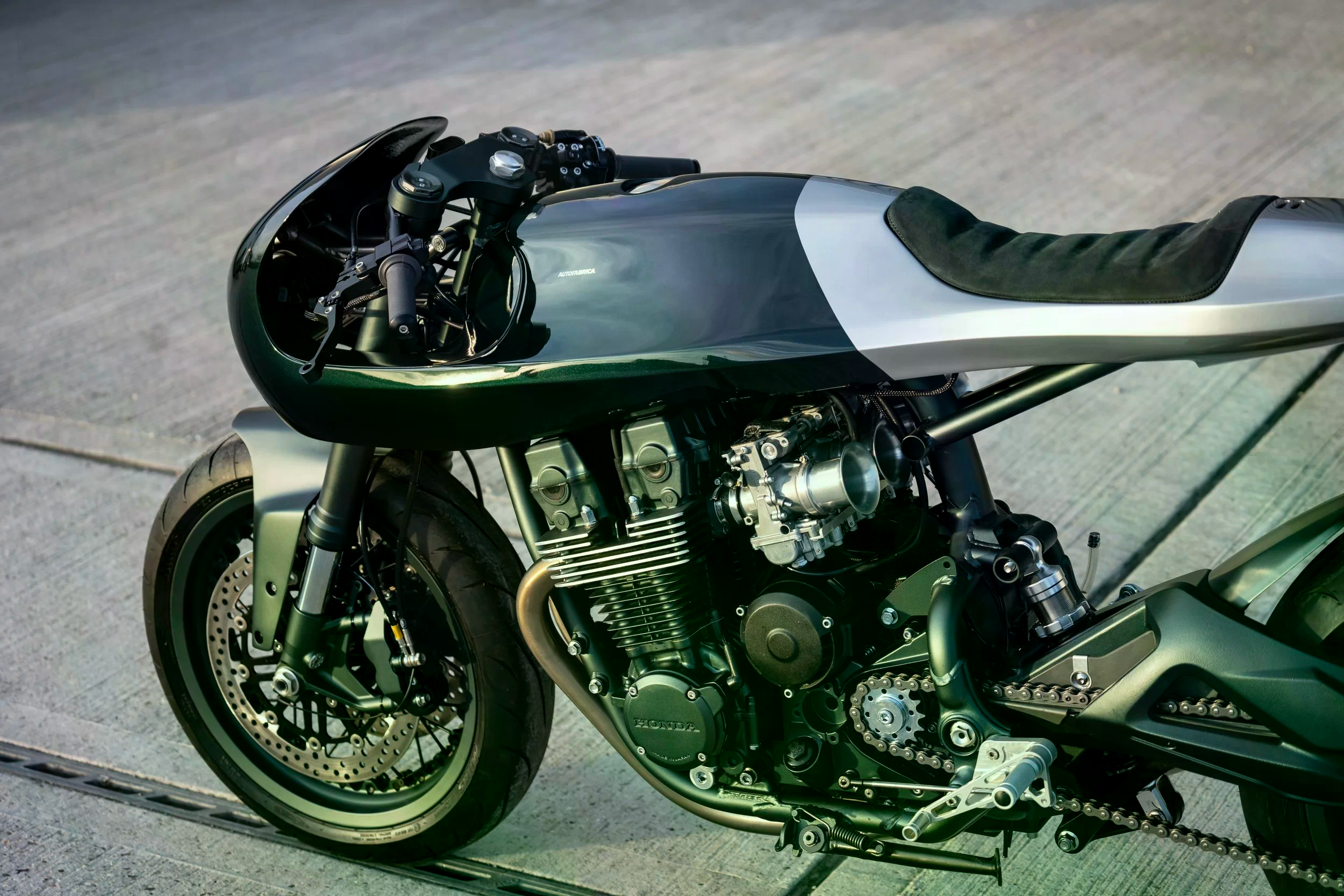
MODERN WITHOUT TRYING TO LOOK MODERN
The electrical system received the same treatment.
A Motogadget m-unit, keyless ignition and a custom wiring harness bring contemporary functionality into the build, while the wiring itself is carefully routed away from view.
The cockpit remains deliberately restrained.
Clip-ons.
Minimal instrumentation.
ISR controls.
Rearsets.
Nothing unnecessary.
Nothing screaming for attention.
It is an interesting balance.
The Type 26 incorporates modern technology without wearing “modern” as a styling statement.
And that may be one reason the design feels less tied to a particular moment.
___
UMA MOTO MODERNA SEM PARECER MODERNA DEMAIS
A eletrônica segue a mesma filosofia.
A Type 26 recebeu uma nova instalação elétrica, com Motogadget m-unit, ignição sem chave e chicote personalizado com roteamento cuidadosamente oculto.
O painel é reduzido a um pequeno instrumento digital.
Os comandos são discretos.
O cockpit utiliza clip-ons e comandos ISR.
As pedaleiras são recuadas.
Tudo parece ter sido reduzido ao essencial.
É curioso:
a motocicleta recebeu uma série de soluções contemporâneas, mas não parece ansiosa para provar que é moderna.
E talvez seja exatamente por isso que ela envelheça tão bem visualmente.
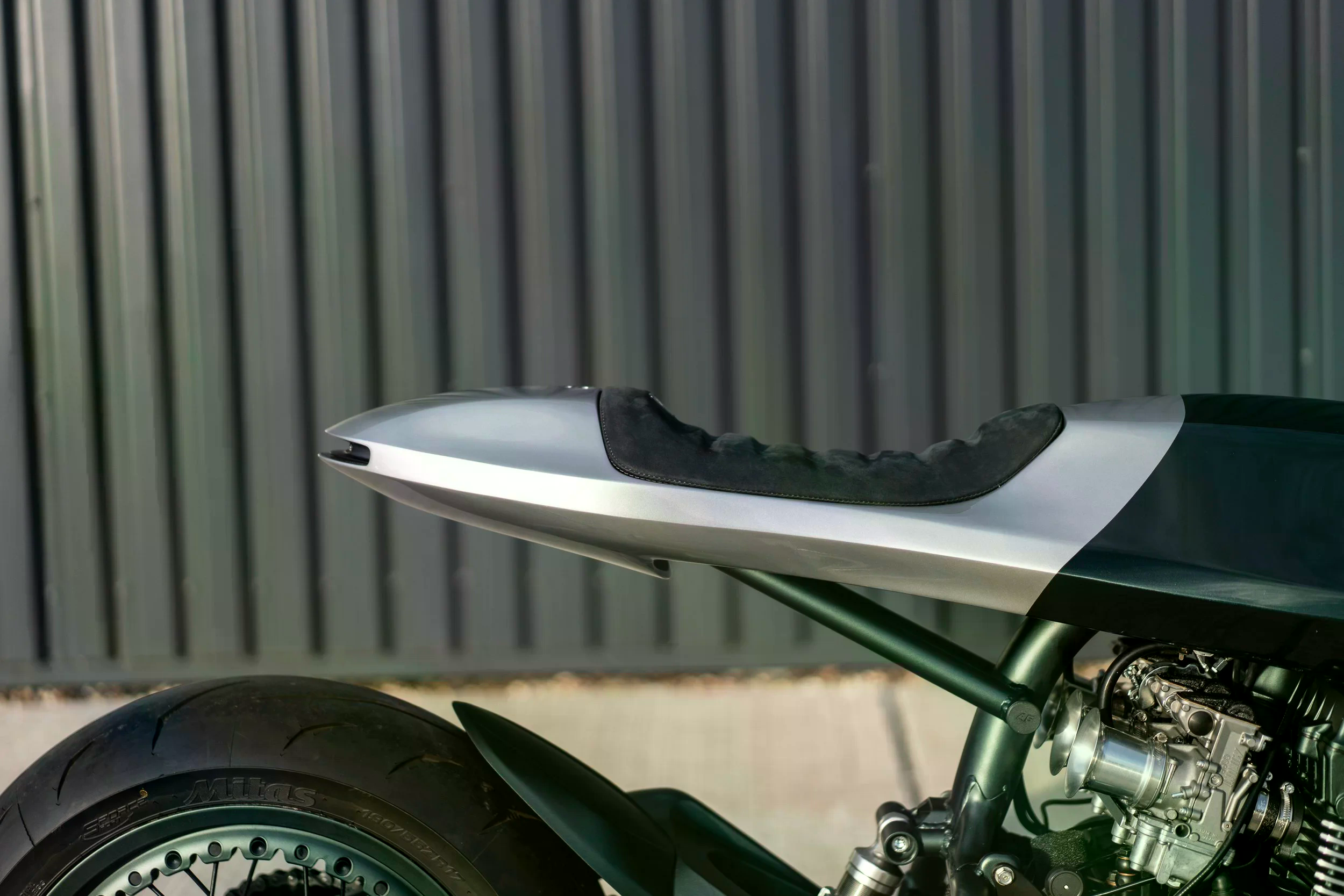
COLOUR & TRIM IS NOT AN AFTERTHOUGHT
This may be where the Type 26 deserves the closest examination.
Colour & Trim.
The British Racing Green bodywork is paired with a silver inspired by Ferrari, while matte green is used across lower areas and mechanical components.
But the sophistication isn’t simply in choosing two good colours.
It is in understanding how different finishes behave.
Gloss reflects.
Matte absorbs.
Metallic surfaces shift with the light.
Carbon introduces another texture.
Alcantara changes the tactile register entirely.
So the motorcycle doesn’t really have “two colours”.
It has different surface behaviours.
Different levels of reflection.
Different depths.
Different relationships with light.
The colour isn’t simply sitting on top of the design.
It helps reveal the design.
___
COLOR & TRIM: A PARTE QUE MUITA GENTE NÃO VÊ
Se existe uma área em que a Type 26 realmente merece ser estudada por quem trabalha com design, é esta.
Color & Trim.
O projeto utiliza British Racing Green combinado a um prata inspirado em uma tonalidade da Ferrari.
Mas o mais interessante não é simplesmente a escolha dessas duas cores.
É a maneira como elas são distribuídas.
O verde aparece tanto em acabamento brilhante quanto fosco.
Partes inferiores — incluindo elementos mecânicos — recebem uma tonalidade verde fosca.
O prata cria uma segunda camada de leitura.
E as diferentes superfícies respondem à luz de maneiras distintas.
Isso significa que a motocicleta não possui apenas duas cores.
Ela possui diferentes comportamentos de superfície.
Brilho.
Opacidade.
Reflexo.
Profundidade.
Material.
Sombra.
É uma composição muito mais próxima do universo do produto premium do que de uma pintura convencional de custom.
E talvez seja por isso que a Type 26 pareça diferente dependendo do ângulo.
A cor não está apenas sobre a forma.
Ela ajuda a revelar a forma.
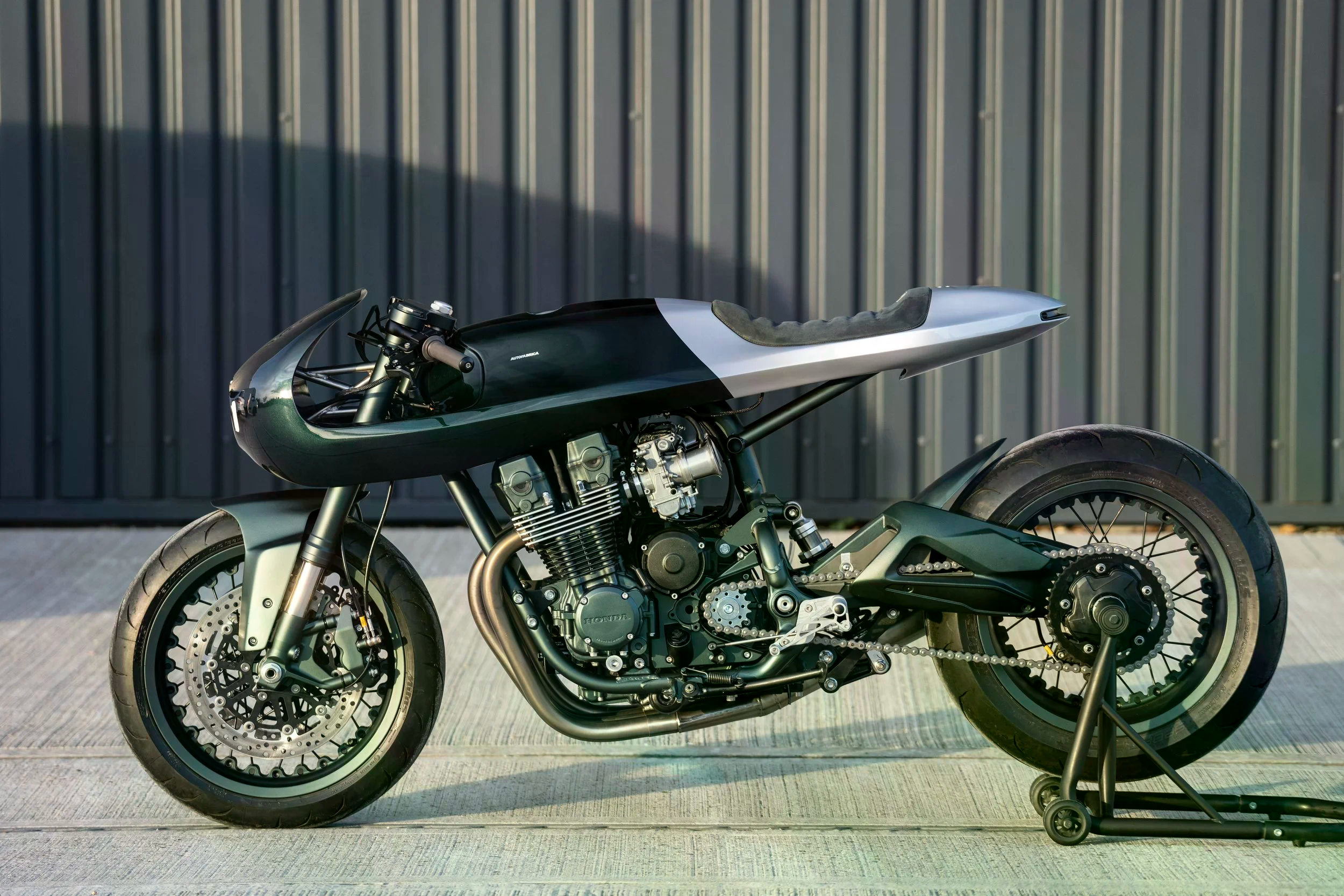
LESS IS MORE — WHEN NOTHING IS MISSING
There is an old design cliché:
Less is more.
The Type 26 suggests a more useful version:
Less is more when nothing is missing.
Because removing things is easy.
Knowing what deserves to remain is much harder.
The wiring disappears.
The fuel cell disappears.
The indicators merge into the body.
The lighting becomes part of the form.
Structural elements are refined rather than disguised.
Modern suspension components coexist with classic mechanical architecture.
Every reduction increases the importance of what remains.
That is why the Type 26 doesn’t need visual drama.
The drama is in the resolution.
___
O VALOR DO QUE NÃO APARECE
Existe uma frase recorrente no universo do design:
“Less is more.”
Mas a Type 26 sugere uma interpretação um pouco diferente.
Less is more — when nothing is missing.
Porque retirar elementos é fácil.
Resolver o que permanece é difícil.
Na Type 26, a ausência de excessos só funciona porque existe uma enorme quantidade de decisões escondidas por trás dela.
O chicote elétrico desaparece.
A célula de combustível desaparece.
Os indicadores desaparecem na carroceria.
A estrutura de suporte se integra à composição.
Os encontros entre superfícies são minimizados.
A iluminação se torna parte da forma.
A mecânica moderna é incorporada sem destruir a identidade do conjunto.
O resultado parece simples.
Mas simplicidade, aqui, é consequência.
Não ponto de partida.
NOT QUITE A CAFÉ RACER
Calling the Type 26 a café racer isn’t wrong.
It just doesn’t tell the whole story.
The clip-ons, riding position, proportions and stripped-back attitude certainly belong to that lineage.
But the project isn’t interested in reproducing a café racer template.
Nor is it simply another neo-retro exercise.
Its relationship with the past is interpretive rather than literal.
It borrows.
It edits.
It rebalances.
It translates.
And eventually, the references become difficult to separate from the new identity.
You recognise Honda.
You sense British racing culture.
You see contemporary engineering.
You catch echoes of competition machinery.
But the finished object belongs unmistakably to Auto Fabrica.
___
MAIS DO QUE UMA CAFÉ RACER
Chamar a Type 26 de café racer não está errado.
Mas talvez seja insuficiente.
Ela absorve elementos desse universo — posição de pilotagem, clip-ons, proporções esportivas, minimalismo — sem se prender à sua iconografia.
Também não é exatamente uma neo-retro.
Porque sua relação com o passado não é de reprodução.
É de interpretação.
E talvez seja justamente isso que a Auto Fabrica tenha conseguido fazer tão bem:
construir uma motocicleta que parece ter vindo de algum lugar conhecido, mas que não conseguimos apontar exatamente de onde.
Reconhecemos a Honda.
Reconhecemos referências britânicas.
Percebemos ecos de competição.
Vemos soluções contemporâneas.
Mas a combinação final não pertence completamente a nenhuma dessas categorias.
Ela pertence à Auto Fabrica.
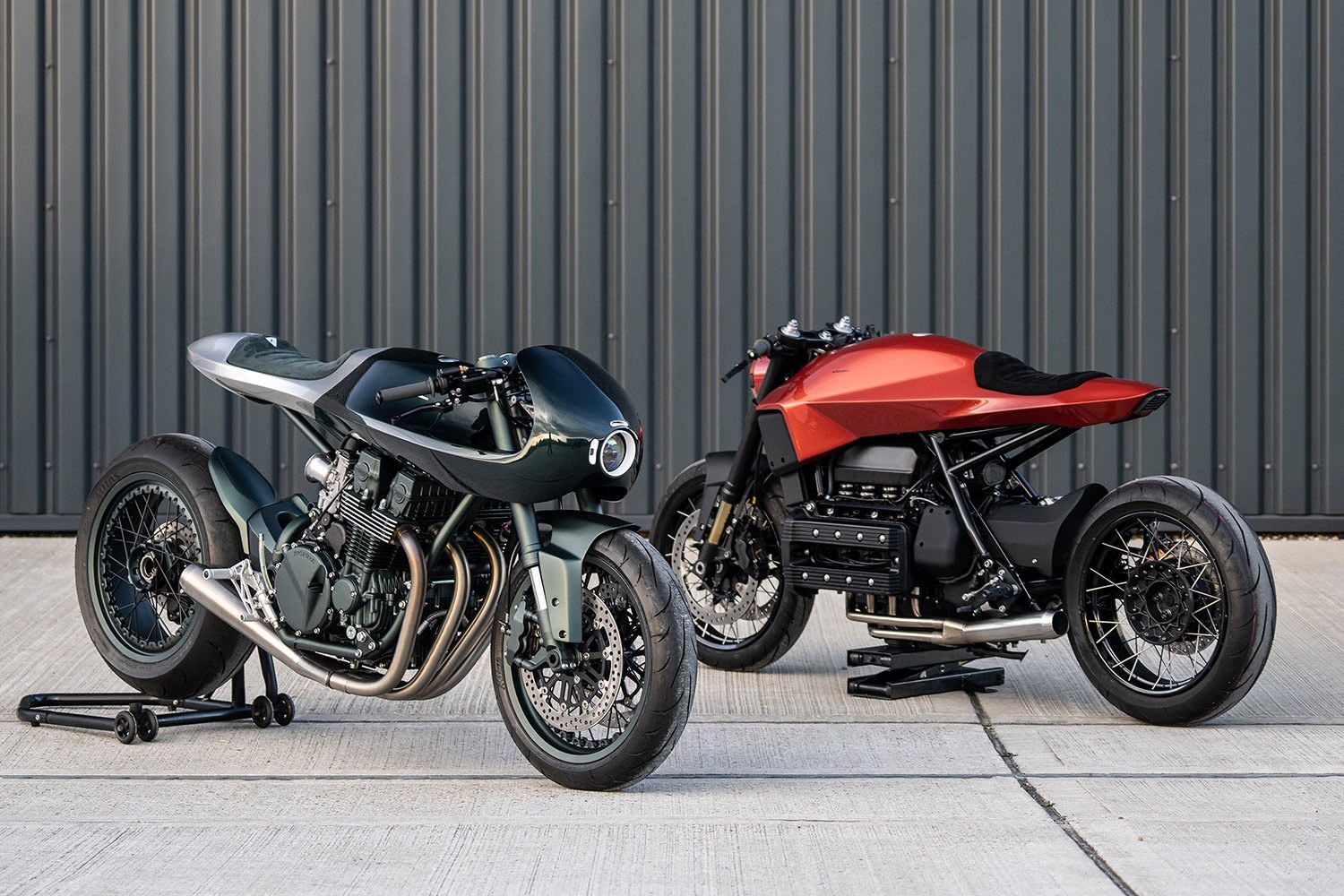
WHAT THE TYPE 26 SAYS ABOUT CUSTOM
There is a familiar assumption in custom culture:
the more work you can see, the more impressive the build must be.
More parts.
More machining.
More carbon.
More fabrication.
More hardware.
More visual aggression.
The Type 26 proposes another way forward.
Edit.
Choose.
Remove.
Integrate.
Refine.
Repeat.
Customisation becomes less about accumulating components and more about creating relationships between them.
That is why the Type 26 doesn’t rely on one spectacular feature.
Take away the badge.
Take away the parts list.
Take away the story.
Look only at the motorcycle.
There is still a design.
____
O QUE A TYPE 26 ENSINA SOBRE CUSTOMIZAÇÃO
Existe uma tendência no universo custom de acreditar que o nível de uma motocicleta está diretamente relacionado à quantidade de modificações.
Mais peças.
Mais usinagem.
Mais componentes especiais.
Mais carbono.
Mais detalhes.
Mais agressividade.
A Type 26 apresenta uma ideia diferente.
Talvez o verdadeiro avanço esteja em editar.
Escolher.
Eliminar.
Integrar.
Refinar.
Criar uma relação entre cada elemento.
A customização deixa de ser uma coleção de boas peças e passa a funcionar como um sistema.
É exatamente por isso que a Type 26 não depende de um detalhe específico para impressionar.
Retire o logotipo.
Retire a história.
Retire a lista de componentes.
Observe apenas a motocicleta.
Ainda existe projeto.
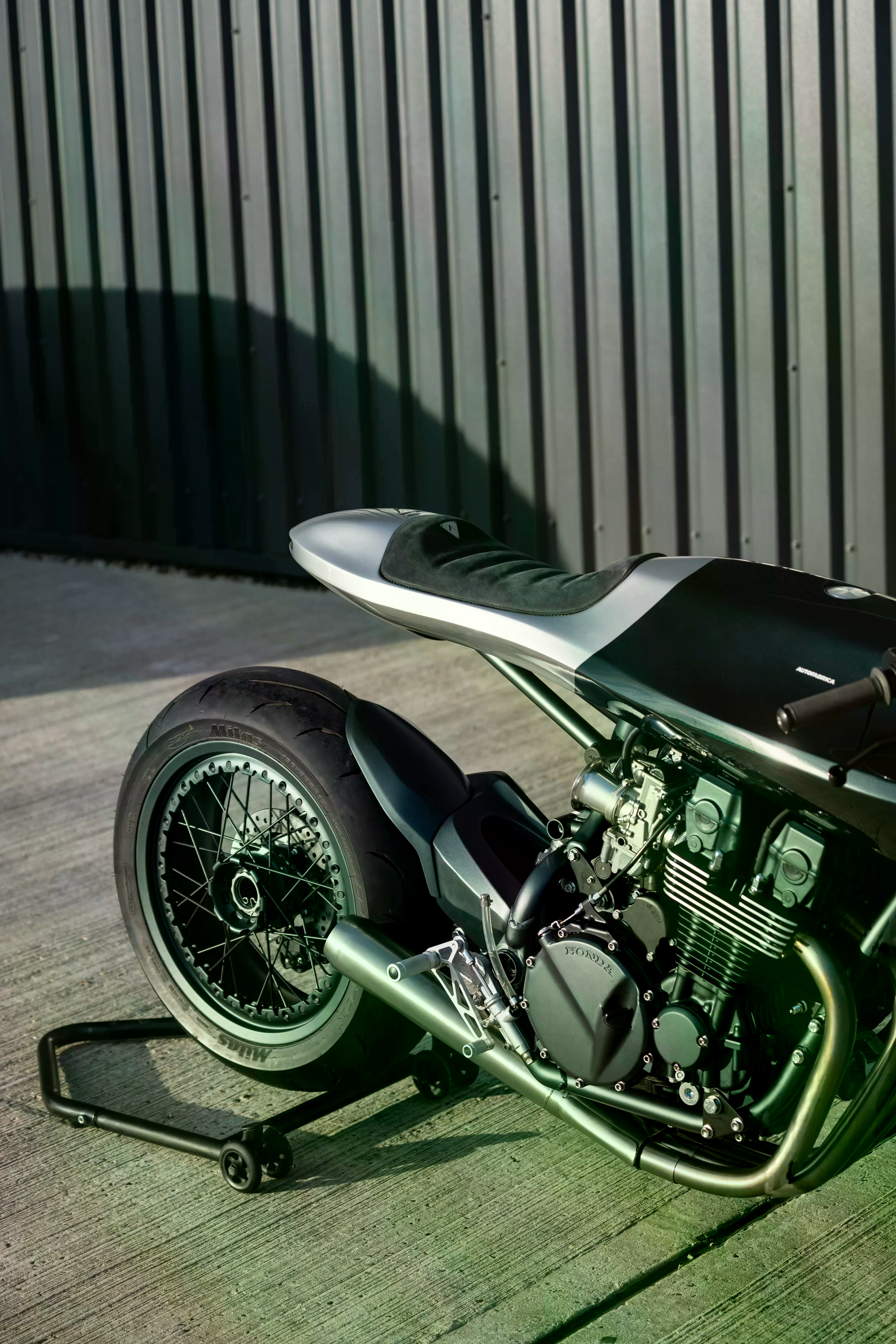
LOOK CLOSER
This is also why the Type 26 remains worth revisiting, long after its first appearance.
The custom scene has already seen the photographs.
The silhouette.
The reveal.
The obvious details.
But this is a motorcycle that changes when you slow down.
Look at the transition between gloss and matte.
Follow the carbon surface.
Find the titanium.
Notice how the headlight disappears into the body.
Look at the way the tail terminates.
Watch how the exhaust relates to the engine.
Study the colour against the material.
Look at what isn’t there.
The closer you get, the more the motorcycle reveals the amount of work invested in making it look effortless.
___
OLHAR DE PERTO
É por isso que este projeto continua relevante mesmo depois de já ter circulado amplamente pelo universo da customização.
Porque fotografias de lançamento normalmente mostram o conjunto.
O impacto.
A silhueta.
A Type 26, entretanto, é uma motocicleta que merece ser vista em detalhe.
Nas pequenas transições de superfície.
Na diferença entre o verde brilhante e o fosco.
No encontro do carbono com o alumínio.
Na estrutura de titânio.
Na maneira como o farol desaparece dentro da carenagem.
No desenho da rabeta.
Na simplicidade do cockpit.
Na relação entre o escape e o motor.
Naquilo que aparece.
E, principalmente, naquilo que foi cuidadosamente feito para desaparecer.
TYPE 26
Perhaps the greatest achievement of the Type 26 isn’t turning a Honda CB750 Nighthawk into something extraordinary.
It is demonstrating that an extraordinary motorcycle doesn’t necessarily have to look extraordinary at first glance.
It can simply look right.
Balanced.
Proportioned.
Quiet.
Resolved.
Then you move closer.
And it starts to reveal itself.
A surface.
A junction.
A material.
A hidden solution.
A decision.
Until you realise that very little here is accidental.
And that is where this motorcycle becomes more than another beautifully executed custom.
It becomes a lesson in design.
Because perhaps the future of custom isn’t about making motorcycles louder, busier or more complicated.
Perhaps it is about becoming more intentional.
Knowing what deserves to exist.
Knowing what doesn’t.
And understanding that sometimes the highest level of craftsmanship is the thing you almost don’t notice.
**The work is there.
You just have to look closer.**
Auto Fabrica Type 26.
A Honda CB750 that stopped being a starting point.
And became a design exercise.
___
TYPE 26
Talvez o maior mérito da Type 26 não seja ter transformado uma Honda CB750 Nighthawk em uma motocicleta extraordinária.
É ter demonstrado que uma motocicleta extraordinária não precisa parecer extraordinária à primeira vista.
Ela pode apenas parecer correta.
Proporcional.
Silenciosa.
Resolvida.
E então, quando você se aproxima, começa a descobrir.
Uma superfície.
Depois outra.
Um material.
Uma junção.
Uma solução.
Um detalhe que parecia invisível.
Até perceber que quase nada ali é casual.
Esse é o tipo de projeto que muda a nossa percepção sobre customização.
Porque, no fim, talvez customizar não seja transformar uma motocicleta em algo mais.
Talvez seja descobrir o que ela pode se tornar quando tudo aquilo que não precisa estar ali deixa de existir.
Auto Fabrica Type 26.
Uma Honda CB750 que deixou de ser apenas uma base.
E passou a ser um exercício de design.
Olhe mais de perto.